INVITED TALKS
5th Workshop on
Highly Parallel Processing on a Chip (HPPC 2011)
August 30, 2011, Bordeaux, France
in conjunction with
August 29 - September 2, 2011, Bordeaux, France.
KEYNOTE
Extreme Thread-Level-Parallelism on Sparc Processors
Rick Hetherington, Vice President, Microelectronics, Oracle Corp, USA
Abstract: Sparc has been the leader in pursuing high levels of throughput on commercial
workloads with the use of Chip-Multithreaded Processors. Introduced in 2005,
the Niagara 1 processor broke new ground by providing 32 processor threads
across 8 cores. This talk will revisit the history of Sparc CMT as well as
presenting the current state of CMT with the fourth generation of Sparc CMT and
some projections as to where this technology is heading in future. The talk will touch on experience gained, lessons learned, what worked and what
did not work during this nearly decade of experience on highly threaded
processor design.
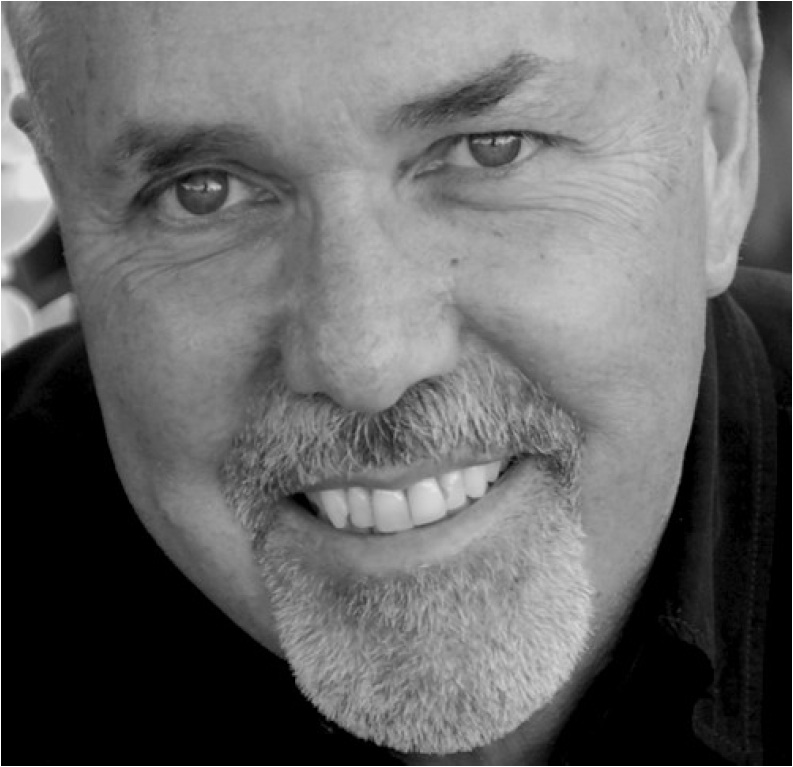 | ||
Rick Hetherington was the chief technology officer for Sun’s Microelectronics business unit where he set the technical direction for Sun's
SPARC processor development and related technologies. Hetherington is driving
Sun's leadership in the chip multithreading (CMT) approach to processor design,
in which multiple cores and multiple threads combine to generate extraordinary
throughput and power efficiency.
Prior to his appointment as CTO, Hetherington provided oversight for the
architecture, performance and roadmap of UltraSPARC T1(TM) processors and
systems as chief architect for Sun's Horizontal Systems group. From 2000 to
2002, Hetherington took a hiatus from Sun to join a networking start-up as VP
of engineering.
Hetherington originally joined Sun in 1996 as co-architect of Sun's Project
Millennium processor. Prior to Sun, he spent 16 years with Digital Equipment
Corp., working on a variety of VAX and Alpha processors and systems. His last
position at Digital was system architect of EV6 (21264) processor.
Hetherington earned his bachelor's degree from Pennsylvania State University and
currently holds 63 patents.
Submission:
June 10, 2011
Notification:
July 25, 2011
Workshop:
August 30, 2011
Final LNCS paper:
September, 2011
Registration:
via Euro-Par
Contact:
chair@hppc-
workshop.org
Sponsors:
|
|
||
 |
|
|
|
|
||
 |
|
|
|
|
|
|